


The Daily Observer London Desk: Reporter- John Furner
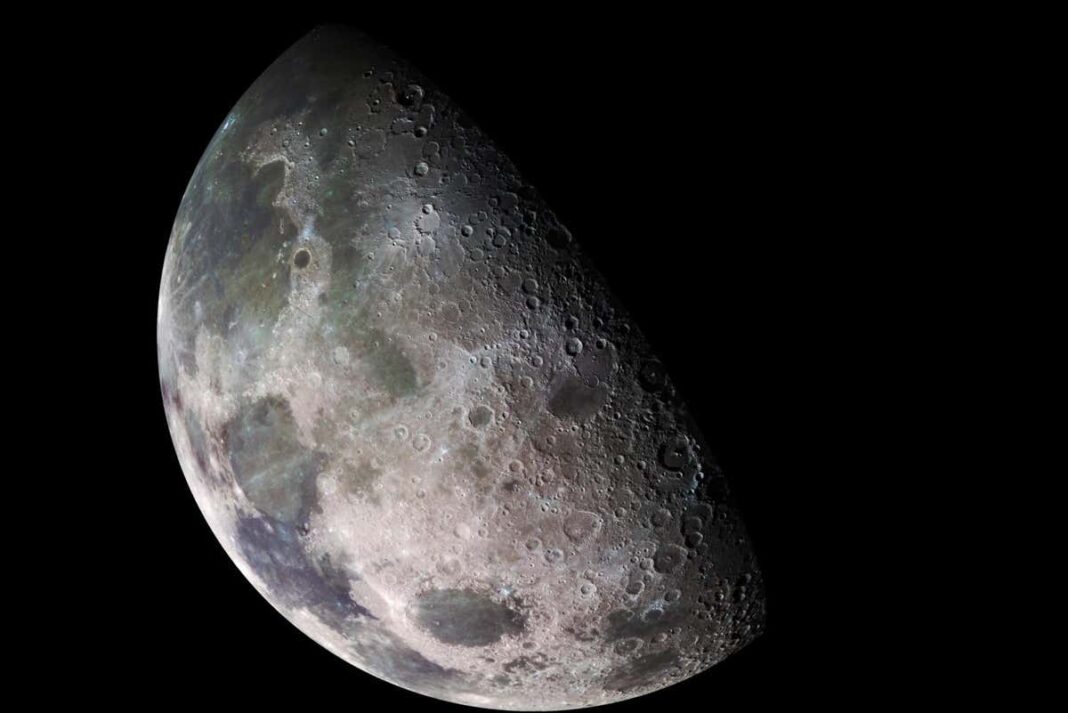
The moon may have formed at least 4.46 billion years ago – 40 million years earlier than we thought
A reanalysis of lunar rook has pushed back the age of the moon by 40 million years. This means it formed at least 4.46 billion years ago.
Scientists think the moon came into existence after a Mars-sized planet smashed into Earth and launched a ball of molten rock into space. As the magma surface of this object cooled and solidified, silicon crystals called zircons were formed. Because of their resilience to heat and harsh environments, the crystals still survive and can be used to identify the moon’s earliest moments.
Zircon crystals contain radioactive uranium, which decays into lead at a well-defined rate, so scientists can determine a rock sample’s age by measuring the amount of lead and uranium in it.
Philipp Heck at the University of Chicago and his colleagues have now reanalysed a sample of zircons from lunar rock brought back from NASA’s Apollo 17 mission in 1972, using a technique called atom probe tomography, and found that the zircons are 4.46 billion years old.
“We now have a date of the zircons, so we can tell the time by which the magma ocean must have been solidified, or largely solidified,” says Heck. “It essentially anchors the entire lunar chronology. It’s almost like putting a nail into the lunar timeline.”
The particular zircon sample that Heck and his team looked at had been analysed in 2021 using a kind of mass spectrometry that suggested the sample was old, but the technique couldn’t pinpoint whether the lead was from radioactive decay or was just there by chance.
Atom probe tomography, however, can analyse the make-up and position of the atoms in high detail, which helped show that they really were from radioactive decay. It uses a beam of charged particles to shave off an extremely thin section from a sample, of just a few atoms, and then a powerful laser evaporates these atoms into a mass spectrometer.
We know that the solar system formed about 4.57 billion years ago, which means we can constrain the moon’s formation reasonably precisely, says Mahesh Anand at the Open University, UK.
“Previous studies have shown that the particular impact that formed the moon happened 50 million years after the formation of the solar system, so if we use that study, and this work, it is giving us a very narrow time window of only 50 million years within which the moon formed and solidified very, very quickly,” says Anand.