

The Daily Observer London Desk: Reporter- John Furner
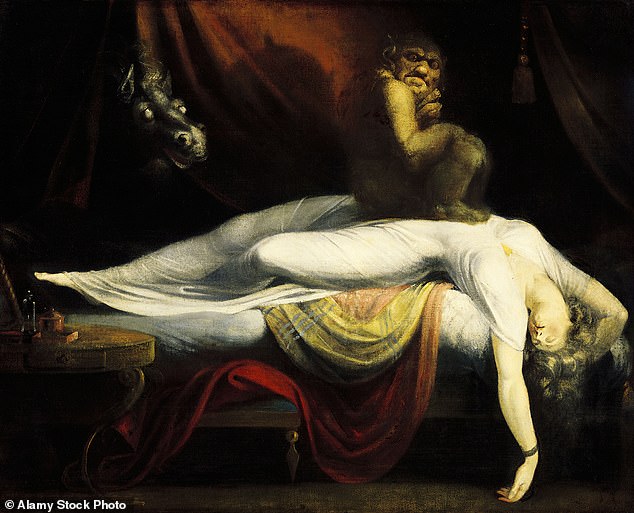
One morning in my teenage years, I awoke gripped by terror. My eyes were wide open, but my body wouldn’t move – frozen from head to toe. While fully conscious, I had this creepy feeling that there was something sinister in my bedroom, a feeling that grew more intense with each passing second.
In this ‘frozen state’ I desperately tried to cry out for help – ‘Mum, Dad’ – but the words were trapped inside my throat. In horror, I realised a demon was now on my bed. It grabbed my legs and began tossing them up and down, while crushing my chest and squeezing my neck. I was being choked and there was nothing I could do to save myself. I was sure I was going to die.
Mustering all my strength, I decided to give it one final try. Every muscle fibre was recruited for the sole purpose of saving my life. And against all odds, it worked. The creature vanished.
I had escaped. But while I was ecstatic to be free, I was also puzzled. I was convinced that I’d just wrestled a magic monster. My chest felt compressed, my knees wobbly, and it was as if a heavy weight had settled on my shoulders.
But should I tell my parents about my bizarre encounter, and if so, what on Earth would I say? It sounded too crazy. Whatever had happened felt both otherworldly and vividly real.
This uncanny experience so intrigued me that years later I was propelled on a journey around the world to study the phenomenon. Had there really been a ghost in my bedroom that morning? Or had my brain merely played tricks on me?
Today, as a neuroscientist at Harvard, I know that what I experienced back then was sleep paralysis. It is caused by a strange but natural glitch in the sleeping brain and usually lasts from seconds to minutes – but can feel like an eternity.
Ever dreamt of a demon crushing your chest? You’re not alone, billions around the world have similar nightmares
As many as one in five people have experienced such visceral ‘nightmares’ at least once. That is roughly 1.6billion of Earth’s population.
But despite its prevalence, sleep paralysis has largely remained a riddle. So what actually happens deep inside your skull when you wake up paralysed in a cold sweat to the sight of demons?
Each night you go through 90-minute cycles of sleep. During ‘light sleep’ (known as Stages 1 and 2) your heart rate and body temperature drop – a sort of transition phase between wakefulness and sleep. In ‘deep sleep’ (Stage 3) your brain engages in critical housekeeping chores: Cerebral repair and rubbish removal.
Sleep paralysis occurs at the transition between the fourth stage, rapid-eye-movement (REM) sleep, where most of our dreams occur, and wakefulness.
To prevent you from acting out these vivid dreams and hurting yourself, your brain temporarily paralyses your body by releasing chemicals. Yet sometimes you wake up while you’re still under the spell of REM paralysis, leaving you stuck, just like a light switch stuck between on and off.
In a sense, wakefulness and the dream world collide… a nightmare on steroids.
Across cultures and individuals, sleep paralysis tends to be built from a small set of recurring ingredients. Many people feel an overwhelming pressure on the chest, as if they are being crushed or suffocated.
Others experience intense sexual sensations or unwanted arousal. Vivid hallucinations are common: Shadowy figures, doppelgangers or menacing presences that seem to move through the room. And the surrounding environment – beds, mirrors, doorways, sounds – often becomes woven into the emotionally charged narrative.
Dr Baland Jalal’s book The Phantom Mind examines the causes of sleep paralysis
To understand why sleep paralysis takes these characteristic forms – why it so reliably produces terror, presence and meaning – we first need to understand a more general principle about how the brain constructs reality itself.
The brain is not a passive receiver of reality, waiting for the world to imprint itself upon it. It is an active prediction machine. From moment to moment, it constructs internal models of the world and of the body – best guesses about what should be happening next – and continuously compares those predictions with incoming sensory data. What we experience as perception is not a direct readout of reality, but the brain’s ongoing attempt to make sense of uncertain information.
Most of the time, this system works so smoothly that we never notice it. When you decide to stand up, your brain predicts the feeling of movement, the shift in balance, the pressure under your feet, and the changing position of your limbs. Sensory feedback from muscles, joints and skin confirms those predictions in real time.
The result is a seamless sense of agency and continuity: You intended to move, you moved, and your body responded exactly as expected.
But this fragile harmony depends on constant agreement between prediction and feedback. When those two fall out of sync, perception can begin to fray. The brain still predicts, but the world – or the body – fails to respond in the expected way.
In such moments, the mind does not simply register an error and stop. It tries to resolve the mismatch, to explain what is happening, and to restore coherence – and it is then that some of the strangest human experiences emerge.
During sleep paralysis, your motor cortex sends urgent commands – ‘Move! Escape!’ – but your body stays still. The brain’s parietal lobes, which track movement, detect this mismatch: Signals are firing, but nothing’s happening. Lacking feedback from the body, your brain tries to fill in the blanks, sometimes creating bizarre sensations like floating, spinning or sinking.
The brain is a pattern-seeking storyteller. When paralysis, chest pressure and choking sensations occur together – leftovers from REM sleep – it tries to make sense of them.
‘These can’t be random,’ it reasons, ‘something must be causing this.’ So it fills in the blanks with familiar ideas from memory: ‘A ghost is sitting on my chest, trying to strangle me.’ Chemical changes in the brain could further facilitate these fantastical visions.
During sleep paralysis, a massive intrusion of wakefulness into REM sleep may flood the brain with serotonin, exciting a receptor that is also triggered by psychedelic compounds like LSD and psilocybin, turning a physiological event like sleep paralysis into a petrifying otherworldly experience.
Tiredness, dizzying stress, too much alcohol, or the side effects of certain medications, make the perfect recipe for restless, choppy sleep – and a higher chance of getting trapped in that spooky state.